
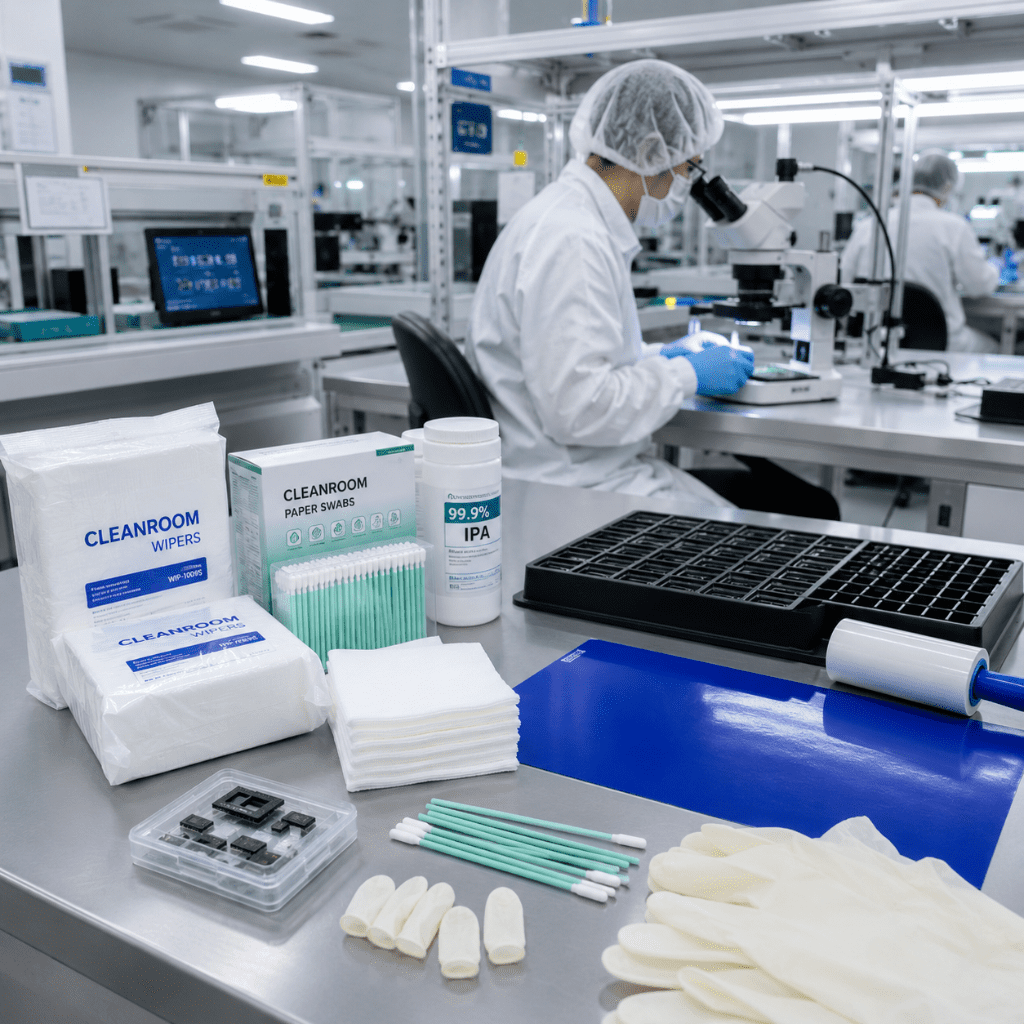
Cleanroom consumables are everyday products used in controlled work environments where cleanliness, careful handling, and organized work practices are important. These products may support wiping, surface cleaning, component handling, workstation maintenance, and personnel preparation in production areas.
Unlike clean room equipment, which may include items such as Fan Filter Units, HEPA filters, air showers, and vacuum cleaners, consumables are products that are commonly replaced, restocked, or used regularly during daily operations.
For buyers, production teams, cleanroom users, and purchasing departments, understanding these product categories can make it easier to choose the right items before viewing the catalogue or sending a product inquiry.
What Are Cleanroom Consumables?
Cleanroom consumables are products used to support cleaner work practices in controlled environments. They may be used for wiping, handling, cleaning small areas, reducing carried-in particles, or supporting personnel preparation before entering certain workspaces.
Common cleanroom consumable categories include:
- cleanroom wipers
- cleanroom foam swabs
- cleanroom microfiber swabs
- cleanroom polyester swabs
- sticky mats
- sticky rollers
- fingercots and fingerstalls
- cleanroom gloves
- facemasks
- head caps
- shoe covers
These products are commonly associated with cleanroom operations, electronics manufacturing, semiconductor-related environments, EMS production areas, inspection work, precision assembly, and other controlled industrial workplaces.
Why Cleanroom Consumables Matter
Controlled work environments often involve sensitive components, clean surfaces, precision materials, or production processes that require careful handling. In these areas, contamination may come through hands, footwear, tools, surfaces, packaging, or workplace movement.
Cleanroom consumables help support better workplace practices by providing suitable products for cleaning, wiping, handling, and movement control.
They may help users:
- wipe surfaces and work areas
- clean small or hard-to-reach areas
- handle parts with less direct contact
- support cleaner entry practices
- reduce unwanted particles carried by shoes or wheels
- maintain organized cleanroom-related workstations
- support daily clean handling routines
Product selection depends on the work area, application, material being handled, and internal workplace requirements.
Common Cleanroom Consumable Categories
Below are the main cleanroom consumable categories buyers may review when selecting products for controlled work areas.
1. Cleanroom Wipers
Cleanroom wipers are used for wiping surfaces, tools, components, and work areas where cleaner handling is required. They are commonly used in controlled production spaces, cleanroom-related environments, and precision handling areas.
Common Applications
Cleanroom wipers may be used for:
- wiping work surfaces
- cleaning tools and equipment surfaces
- handling controlled-area wiping tasks
- supporting production area cleanliness
- preparing surfaces before work activities
Buyer Considerations
When reviewing cleanroom wipers, buyers may need to consider:
- wiper material
- size
- packaging type
- wiping application
- surface type
- cleanliness requirements of the work area
- compatibility with the user’s internal process
Cleanroom wipers should be selected based on the intended task. A wiping product used for general surface cleaning may not always be suitable for precision cleaning or sensitive component handling.
2. Cleanroom Foam Swabs
Cleanroom foam swabs are used for cleaning small spaces, narrow areas, component surfaces, or hard-to-reach points. They are useful when a standard wiper is too large for the cleaning task.
Common Applications
Cleanroom foam swabs may be used for:
- cleaning small parts
- wiping narrow gaps
- cleaning around components
- controlled area maintenance
- precision cleaning tasks
Buyer Considerations
When selecting foam swabs, buyers may consider:
- swab head size
- handle length
- foam shape
- cleaning area
- intended surface
- required level of handling precision
Foam swabs are often chosen when users need more controlled wiping in smaller areas.
3. Cleanroom Microfiber Swabs
Cleanroom microfiber swabs are another swab category used for controlled wiping and cleaning tasks. Microfiber materials are commonly associated with fine wiping applications where soft contact and careful cleaning are important.
Common Applications
Cleanroom microfiber swabs may be used for:
- precision cleaning
- wiping delicate surfaces
- cleaning small components
- inspection-related work
- controlled production support
Buyer Considerations
Buyers may need to review:
- swab material
- head shape
- handle size
- cleaning application
- sensitivity of the surface
- workplace handling procedure
Microfiber swabs are often considered when users need a cleanroom-related swab option for more careful wiping tasks.
4. Cleanroom Polyester Swabs
Cleanroom polyester swabs are used in controlled work areas where swabbing, wiping, or small-area cleaning is needed. They are part of the cleanroom swab product categories available in Biz One’s catalogue.
Common Applications
Cleanroom polyester swabs may be used for:
- small-area cleaning
- controlled wiping tasks
- production support
- component handling areas
- cleanroom-related workstations
Buyer Considerations
When selecting polyester swabs, buyers may consider:
- swab size
- tip design
- handle material
- work area requirements
- cleaning method
- product compatibility with the task
The right swab choice depends on the surface, work process, and cleaning area.
5. Sticky Mats
Sticky mats are placed near entrances or transition points to help reduce particles carried by footwear or wheels before entering a controlled area. They are commonly used in cleanroom-related and controlled workplace environments.
Common Applications
Sticky mats may be used at:
- cleanroom entrances
- controlled area entry points
- production room access points
- laboratory-related work areas
- sensitive manufacturing zones
Buyer Considerations
When reviewing sticky mats, buyers may need to consider:
- mat size
- number of layers
- placement area
- traffic level
- floor layout
- entry procedure
- frequency of replacement
Sticky mats are often selected based on the size of the entrance and the volume of people or movement passing through the area.
6. Sticky Rollers
Sticky rollers are used to pick up particles, dust, or loose matter on surfaces, tools, work areas, or selected materials. They are often used as part of cleaning routines in controlled environments.
Common Applications
Sticky rollers may be used for:
- surface cleaning
- workstation cleaning
- removing loose particles
- cleaning selected tools or materials
- supporting controlled area maintenance
Buyer Considerations
Buyers may need to consider:
- roller size
- handle type
- adhesive level
- replacement roll availability
- surface compatibility
- intended cleaning frequency
Sticky rollers are useful when users need a simple, repeatable way to remove loose particles in selected work areas.
7. Fingercots and Fingerstalls
Fingercots and fingerstalls are worn over fingers to support cleaner handling and reduce direct contact with products, parts, or surfaces. They are commonly used in electronics, cleanroom-related, and precision handling environments.
Common Applications
Fingercots and fingerstalls may be used for:
- component handling
- product inspection
- assembly work
- precision handling
- cleanroom-related production tasks
Buyer Considerations
When choosing fingercots or fingerstalls, buyers may review:
- material
- size
- fit
- comfort
- intended handling task
- work area requirements
- whether ESD-related properties are needed
These products are often selected for tasks that need finger coverage without using a full glove.
8. Cleanroom Gloves
Cleanroom gloves are used when workers need hand coverage in controlled environments. They help reduce direct contact between hands and products, surfaces, or materials being handled.
Common Applications
Cleanroom gloves may be used for:
- cleanroom-related handling
- electronics assembly
- product inspection
- controlled production work
- sensitive material handling
Buyer Considerations
Buyers may need to consider:
- glove material
- size and fit
- comfort
- grip
- handling sensitivity
- work area requirement
- whether the glove is also needed for ESD-related use
Cleanroom gloves should be selected based on the task, user comfort, and intended work environment.
9. Facemasks, Head Caps and Shoe Covers
Facemasks, head caps, and shoe covers are commonly used in controlled areas where personnel preparation and cleaner workplace practices are required.
Common Applications
These items may be used for:
- cleanroom-related entry
- production areas
- controlled handling environments
- workplace preparation routines
- areas where head, face, or footwear coverage is required
Buyer Considerations
Buyers may need to review:
- product type
- size
- fit
- comfort
- packaging quantity
- intended work area
- internal workplace requirements
These products are often selected as part of a broader cleanroom or controlled-area preparation process.
Where Are Cleanroom Consumables Commonly Used?
Cleanroom consumables may be used in workplaces that require cleaner handling, controlled wiping, careful product movement, or organized production routines.
Common environments include:
- cleanroom operations
- electronics manufacturing
- EMS production areas
- semiconductor-related environments
- inspection areas
- precision assembly workstations
- controlled production rooms
- laboratory-related workplaces
- product handling and packaging areas
The exact product selection depends on the work process, sensitivity of the product, cleanliness requirement, and internal handling procedure.
How to Choose the Right Cleanroom Consumables
Choosing cleanroom consumables starts with identifying the specific task. A product used for wiping a workbench may not be the same product needed for cleaning a small component or reducing particles at an entry point.
Here are practical questions buyers can ask:
- Is the product needed for wiping, swabbing, handling, entry control, or personnel preparation?
- Will it be used in a cleanroom, production area, inspection room, or general controlled workspace?
- What surface, component, or material will be handled?
- Is a wiper, swab, glove, fingercot, sticky mat, or sticky roller more suitable for the task?
- What size, material, packaging, or replacement quantity is needed?
- Does the workplace require ESD-related cleanroom products?
- How often will the product be used or replaced?
These questions help buyers narrow the product category before reviewing the catalogue or sending an inquiry.
Cleanroom Consumables Available Through Biz One’s Catalogue
Biz One’s catalogue includes cleanroom and ESD-related product categories such as:
- Cleanroom Wipers
- Cleanroom Foam Swabs FS Series
- Cleanroom Microfiber Swabs MS Series
- Cleanroom Polyester Swabs PS Series
- Sticky Mat
- Sticky Roller
- Fingercots & Fingerstall
- ESD/Cleanroom Gloves
- Facemask & Shoe Cover
- ESD Apparels
- ESD Cleanroom Shoes & Slippers
- ESD/Cleanroom Office Supply
These categories give buyers a practical starting point when exploring products for controlled workspaces, clean handling, wiping, swabbing, and static-sensitive environments.
Cleanroom Consumables and ESD-Controlled Areas
Some workplaces need both cleaner handling and static control. For example, electronics manufacturing and semiconductor-related environments may require products that support clean handling while also considering static-sensitive work practices.
In these environments, cleanroom consumables may be used together with ESD-related products such as:
- ESD gloves
- wrist straps and grounding cords
- ESD mats
- ionizers
- ESD tweezers
- conductive plastic boxes
- ESD test instruments
- ESD chairs and shoes
A complete product setup depends on the work area, product sensitivity, internal requirements, and handling process.
Final Thoughts
Cleanroom consumables are practical, frequently used products that support cleaner handling, wiping, swabbing, surface control, and workplace preparation in controlled environments.
For buyers, the best starting point is to identify the application first. Wipers may be suitable for broader surface cleaning, swabs may be better for small or detailed areas, sticky mats may support entry control, sticky rollers may help with surface particle removal, and fingercots may support direct finger handling tasks.
Understanding these categories makes it easier to browse the catalogue and send a clearer product inquiry based on the work area, industry, and application.
Frequently Asked Questions
Cleanroom consumables are regularly used products that support cleaner handling, wiping, swabbing, personnel preparation, and controlled workplace practices. Examples include wipers, swabs, sticky mats, sticky rollers, gloves, fingercots, facemasks, head caps, and shoe covers.
Cleanroom wipers are commonly used for wiping broader surfaces, tools, or work areas. Cleanroom swabs are smaller and are often used for detailed cleaning, narrow spaces, components, or hard-to-reach areas.
Sticky mats are commonly placed near entry points to help reduce particles carried by footwear or wheels before entering a controlled area.
Sticky rollers are used to pick up loose particles, dust, or unwanted matter on selected surfaces, tools, workstations, or materials.
Fingercots and fingerstalls are commonly used when workers need finger coverage for handling, inspection, assembly, or precision tasks without wearing a full glove.
No. Cleanroom consumables may also be used in electronics manufacturing, EMS production areas, semiconductor-related environments, inspection areas, precision assembly stations, and other controlled workplaces.
Buyers should start by identifying the task, work area, surface, material, required product type, usage frequency, and whether cleanroom or ESD-related requirements apply.
Related Blogs
Fingercots 101: How to Choose the Right ESD Protection
Quick answer: Black conductive fingercots are carbon-loaded nitrile fingertip covers built for ESD-safe precision handling. Under the ANSI/ESD S20.20 and IEC 61340-5-1 convention, “conductive” materials sit
Fume Extractor Malaysia: 7 Buying Tips for Safer EMS Workstations
A Buyer’s Guide for Malaysian EMS Facilities A fume extractor is the one piece of equipment standing between that exposure and the worker breathing it

The Complete ESD & Cleanroom Garment Range: A Buyer’s Guide to Outfitting a Malaysian Electronics Plant from Head to Foot
Quick answer: A complete ESD/cleanroom gowning program covers nine garment categories — head covers, jackets/coveralls, smocks, chair covers, shoe covers, arm sleeves, aprons, and ESD bags