
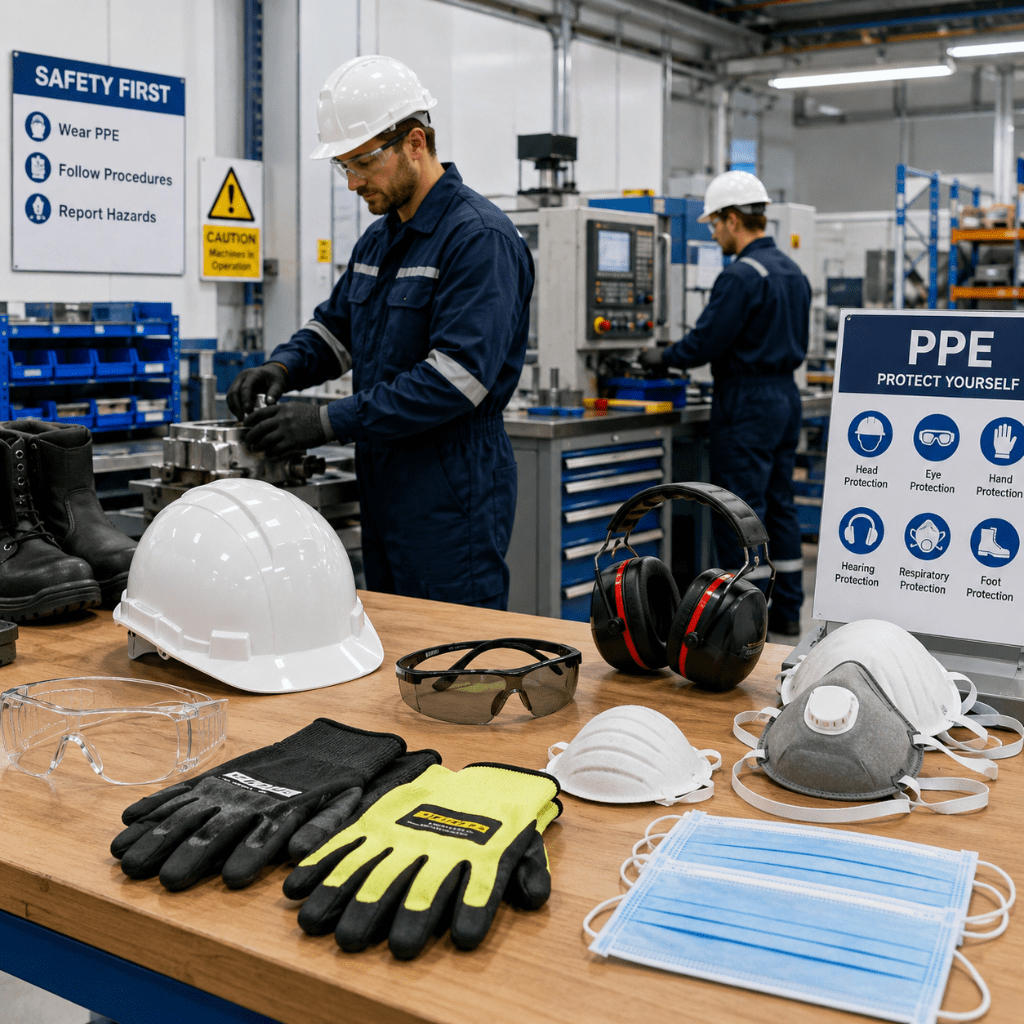
Personal Protective Equipment, commonly known as PPE, is used in workplaces where workers need suitable protective products for specific tasks, environments, or handling conditions. In industrial and manufacturing settings, PPE may be required across production floors, warehouses, maintenance areas, cleanroom-related spaces, packaging areas, and facility support zones.
PPE is not a single product type. It covers many categories, including head protection, eye protection, hand protection, body protection, respiratory protection, hearing protection, fall protection, spill kit control, safety storage cabinets, emergency response products, eyewash and shower products, and other safety-related products.
For buyers, safety teams, purchasing departments, and workplace supervisors, understanding PPE categories makes it easier to identify which product group to explore before viewing the catalogue or sending a product inquiry.
What Is PPE?
PPE refers to protective products worn or used by workers to support safer work practices in specific workplace conditions. PPE may protect the head, eyes, face, hands, body, breathing area, hearing, or full body during selected industrial activities.
In manufacturing and industrial environments, PPE is commonly selected based on:
- task type
- work area
- exposure condition
- handling requirement
- workplace procedure
- internal safety policy
- industry or facility requirements
PPE should always be chosen based on the actual work environment and applicable workplace requirements. This guide is intended to help users understand common PPE categories, not to replace a formal safety assessment.
Why PPE Product Categories Matter
Industrial workplaces may involve moving parts, tools, chemicals, dust, noise, heat, handling tasks, maintenance activity, storage areas, or production processes. Because each work area may involve different risks, PPE products are usually grouped by protection type.
Understanding PPE categories helps buyers:
- identify which product group is relevant to the task
- compare product options more clearly
- organize purchasing requirements by workplace area
- support discussions between safety, purchasing, and production teams
- send more accurate product inquiries
- avoid mixing unrelated PPE items in one request
For example, a worker handling materials may need hand protection, while a worker in a noisy area may need hearing protection. A facility handling liquid spills may need spill control products, while a workplace with chemical storage requirements may need safety storage cabinets.
Common PPE Product Categories
Below are key PPE and safety product categories available through Biz One’s catalogue.
1. Head Protection
Head protection products are used in workplaces where workers may need protection for the head area. These products are commonly considered in industrial, maintenance, construction-related, facility, production, and warehouse environments.
Common Applications
Head protection may be used in:
- production floors
- warehouse areas
- facility maintenance zones
- equipment handling areas
- industrial workspaces
- areas with overhead work activity
Buyer Considerations
When reviewing head protection products, buyers may need to consider:
- work area condition
- helmet or headgear type
- fit and comfort
- compatibility with other PPE
- workplace procedure
- user movement and task duration
Head protection should be selected based on the workplace’s actual task and safety requirements.
2. Eye Protection
Eye protection products are used when workers need to help protect the eye area during selected workplace tasks. These may be considered in areas involving particles, dust, splashes, tools, inspection work, or production activity.
Common Applications
Eye protection may be used in:
- production areas
- maintenance work
- cleaning tasks
- laboratory-related spaces
- handling areas
- industrial workstations
Buyer Considerations
Buyers may need to consider:
- type of eye protection
- coverage area
- comfort and fit
- lens type
- compatibility with facemasks or respirators
- visibility needs
- work area condition
Eye protection should be chosen based on the specific work activity and workplace requirements.
3. Hand Protection
Hand protection is one of the most common PPE categories in industrial and manufacturing workplaces. Gloves may be used for handling, assembly, maintenance, cleaning, inspection, packaging, or general production tasks.
Biz One’s product categories include hand protection and industrial glove options such as cut-resistant gloves, PU coated gloves, nitrile palm coated gloves, and other industrial gloves.
Common Applications
Hand protection may be used for:
- material handling
- production work
- warehouse operations
- assembly tasks
- inspection work
- maintenance activity
- packaging processes
- controlled handling environments
Buyer Considerations
When choosing hand protection, buyers may need to consider:
- glove material
- grip requirement
- handling sensitivity
- cut resistance needs
- coating type
- comfort and fit
- work duration
- dry or wet handling condition
- product or material being handled
Different glove types are suited for different tasks, so buyers should match the glove category to the actual handling requirement.
4. Body Protection
Body protection products are used when workers need coverage for the body during selected industrial or manufacturing activities. These may be considered in production areas, maintenance work, controlled areas, cleaning tasks, or handling environments.
Common Applications
Body protection may be used in:
- manufacturing areas
- facility maintenance zones
- cleaning work
- handling areas
- controlled production spaces
- industrial workstations
Buyer Considerations
Buyers may need to consider:
- type of body protection
- coverage level
- size and fit
- material
- comfort
- movement requirements
- compatibility with gloves, head protection, or respiratory protection
The right body protection depends on the task, workplace condition, and internal procedure.
5. Respiratory Protection
Respiratory protection products are used in workplaces where workers may require breathing-related protection based on the work condition. These products are commonly considered in environments involving dust, particles, fumes, vapours, cleaning tasks, or selected industrial processes.
Common Applications
Respiratory protection may be used in:
- production areas
- maintenance work
- cleaning activities
- facility support zones
- handling environments
- areas where airborne particles may be present
Buyer Considerations
When reviewing respiratory protection, buyers may need to consider:
- work environment
- type of airborne exposure
- product type
- fit and comfort
- duration of use
- compatibility with eye protection or face protection
- workplace safety procedure
Respiratory protection should be selected carefully according to workplace requirements and the type of exposure involved.
6. Hearing Protection
Hearing protection products are used in work areas where noise levels may require protective equipment. These products are commonly considered in manufacturing, machinery, maintenance, facility, and production environments.
Common Applications
Hearing protection may be used in:
- machine areas
- production floors
- maintenance zones
- equipment rooms
- manufacturing facilities
- industrial workspaces
Buyer Considerations
Buyers may need to consider:
- type of hearing protection
- comfort during long use
- fit
- workplace noise condition
- communication needs
- compatibility with helmets or other PPE
The product should match the work area and the user’s task requirements.
7. Fall Protection
Fall protection products are used in workplace situations where workers may be exposed to height-related risks. These products are commonly considered in maintenance, facility, construction-related, warehouse, and industrial environments.
Common Applications
Fall protection may be used for:
- elevated work areas
- maintenance work at height
- facility access tasks
- warehouse support activities
- industrial equipment areas
Buyer Considerations
When reviewing fall protection products, buyers may need to consider:
- working height
- task type
- attachment point requirements
- user movement
- product compatibility
- workplace procedure
- applicable safety requirements
Fall protection must be selected based on proper workplace assessment and safety requirements.
8. Spill Kit Control
Spill kit control products are used in workplaces where teams need products for managing selected spill situations. They are commonly considered in manufacturing, facility, warehouse, storage, and maintenance areas.
Common Applications
Spill kit control products may be used in:
- production areas
- storage rooms
- warehouses
- facility maintenance zones
- chemical handling areas
- industrial workplaces
Buyer Considerations
Buyers may need to consider:
- type of liquid or material handled
- spill kit size
- workplace location
- storage area
- accessibility
- response procedure
- internal safety requirements
Spill kit selection should match the materials present in the workplace and the response plan used by the facility.
9. Safety Storage Cabinets
Safety storage cabinets are used in workplaces where selected materials need to be stored in a more organized and safety-focused manner. They are commonly considered in industrial, manufacturing, laboratory-related, maintenance, and facility areas.
Common Applications
Safety storage cabinets may be used in:
- industrial storage areas
- chemical handling spaces
- maintenance rooms
- production facilities
- laboratories
- facility support areas
Buyer Considerations
When reviewing safety storage cabinets, buyers may need to consider:
- type of material stored
- cabinet size
- storage location
- workplace procedure
- labeling requirements
- access control
- internal safety policy
Buyers should confirm whether a cabinet is suitable for the materials and storage conditions required by the workplace.
10. Emergency Response Products
Emergency response products are used to support workplace preparedness for selected situations. These may be part of a broader industrial safety setup and are commonly reviewed by safety, facility, or operations teams.
Common Applications
Emergency response products may be used in:
- production facilities
- warehouses
- maintenance areas
- industrial workspaces
- facility support zones
- controlled work environments
Buyer Considerations
Buyers may need to consider:
- workplace risk areas
- accessibility
- product placement
- response procedure
- user training needs
- inspection and replacement schedule
- internal workplace requirements
Emergency response products should align with the facility’s safety procedures and emergency planning.
11. Eyewash and Shower Products
Eyewash and shower products are used in workplaces where immediate rinsing access may be required based on the materials, tasks, or workplace environment. These products are commonly reviewed for industrial, manufacturing, laboratory-related, and facility areas.
Common Applications
Eyewash and shower products may be used in:
- chemical handling areas
- laboratories
- production floors
- maintenance zones
- industrial facilities
- facility safety stations
Buyer Considerations
When reviewing eyewash and shower products, buyers may need to consider:
- installation location
- accessibility
- water supply requirement
- workplace layout
- type of work performed nearby
- internal safety procedure
- maintenance requirements
The right product depends on the facility layout and workplace safety requirements.
Where Are PPE Products Commonly Used?
PPE products may be used across many industrial and manufacturing environments, including:
- production floors
- warehouses
- cleanroom-related spaces
- maintenance areas
- assembly lines
- packaging areas
- storage rooms
- facility support zones
- inspection areas
- laboratory-related workplaces
- logistics and handling areas
The exact PPE selection depends on the work activity, workplace condition, internal safety requirements, and the type of product or material being handled.
How to Choose the Right PPE Category
Choosing PPE starts with identifying the workplace task. A buyer should not begin with the product name alone. The better starting point is to understand what the worker is doing, what area they are working in, and what type of protection is required.
Here are practical questions to ask:
- Which part of the body needs protection?
- What task will the worker perform?
- Where will the product be used?
- What materials, tools, equipment, or workplace conditions are involved?
- Does the product need to work with other PPE items?
- How long will the user wear or use the product?
- What size, fit, comfort, or movement requirements matter?
- Are there workplace procedures or safety requirements that must be followed?
- Is the product needed for daily use, emergency response, storage, or special handling?
- What information should be included in the product inquiry?
These questions help buyers narrow the correct category before exploring the catalogue.
PPE and Safety Products Available Through Biz One’s Catalogue
Biz One’s catalogue includes PPE and safety-related categories such as:
- Head Protection
- Eye Protection
- Hand Protection
- Body Protection
- Respiratory Protection
- Hearing Protection
- Fall Protection
- Spill Kit Control
- Safety Storage Cabinet
- Emergency Response
- Eyewash & Shower
- Other Safety Products
Biz One’s catalogue also includes industrial glove categories such as:
- Industrial Gloves
- Cut-Resistant Gloves
- PU Coated Gloves
- Nitrile Palm Coated Gloves
These categories give users a practical starting point when exploring PPE and safety-related products for industrial, manufacturing, facility, warehouse, and production environments.
PPE Product Selection Tips for Buyers
When preparing a PPE inquiry, it helps to include clear details about the workplace and application. This allows the product discussion to start with better context.
Useful inquiry details may include:
- product category needed
- work area or department
- task or application
- quantity required
- size or variation needed
- material preference, if known
- usage frequency
- related PPE currently used
- delivery or purchasing timeline
- any required product documents or specifications
Clear inquiry details help reduce back-and-forth communication and make the product selection process more efficient.
Final Thoughts
PPE products support many industrial and manufacturing workplace needs. Because each task and environment may require a different type of protection, buyers should first identify the correct PPE category before comparing individual products.
Whether the need involves head protection, eye protection, hand protection, body protection, respiratory protection, hearing protection, fall protection, spill kit control, safety storage, emergency response, or eyewash and shower products, category clarity helps teams browse the catalogue more efficiently and send more accurate product inquiries.
Frequently Asked Questions
PPE stands for Personal Protective Equipment. It refers to protective products worn or used by workers to support safer work practices in specific workplace conditions.
Common PPE categories include head protection, eye protection, hand protection, body protection, respiratory protection, hearing protection, fall protection, spill kit control, safety storage cabinets, emergency response products, and eyewash and shower products.
Buyers should start by identifying the work task, work area, type of protection needed, user comfort needs, compatibility with other PPE, and any internal workplace safety requirements.
Yes. Industrial gloves are commonly part of hand protection. Biz One’s catalogue includes glove-related categories such as industrial gloves, cut-resistant gloves, PU coated gloves, and nitrile palm coated gloves.
Spill kit control products are used in workplaces where teams need products to manage selected spill situations based on the materials handled and the facility’s response procedure.
Safety storage cabinets are used to store selected materials in a more organized and safety-focused way, depending on the workplace condition, material type, and internal safety procedure.
Yes. PPE should always be selected based on the actual work environment, task, exposure condition, and applicable workplace requirements. This article is for general product category guidance only.
Related Blogs

Fingercots 101: How to Choose the Right ESD Protection
Quick answer: Black conductive fingercots are carbon-loaded nitrile fingertip covers built for ESD-safe precision handling. Under the ANSI/ESD S20.20 and IEC 61340-5-1 convention, “conductive” materials sit
Fume Extractor Malaysia: 7 Buying Tips for Safer EMS Workstations
A Buyer’s Guide for Malaysian EMS Facilities A fume extractor is the one piece of equipment standing between that exposure and the worker breathing it

The Complete ESD & Cleanroom Garment Range: A Buyer’s Guide to Outfitting a Malaysian Electronics Plant from Head to Foot
Quick answer: A complete ESD/cleanroom gowning program covers nine garment categories — head covers, jackets/coveralls, smocks, chair covers, shoe covers, arm sleeves, aprons, and ESD bags